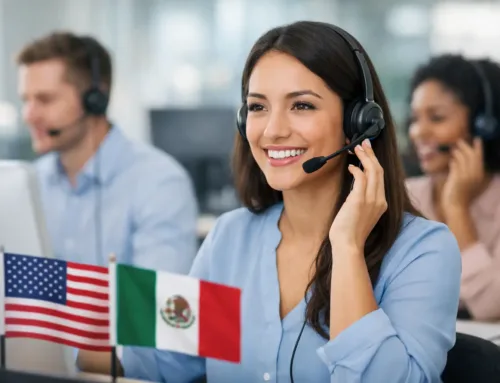

A missed customer interaction rarely looks dramatic in the moment. It sounds like a long hold time, a scripted answer that misses the real issue, or a Spanish-speaking customer who leaves the conversation feeling tolerated instead of understood. That is why top bilingual customer support solutions matter – not as a nice-to-have, but as an operating decision that affects retention, brand trust, and cost control.
For U.S. businesses serving both English- and Spanish-speaking customers, the wrong support model creates friction fast. You spend more to hire, more to train, and more to fix preventable service failures. The right model does the opposite. It gives you language coverage, stronger customer interactions, and a support operation that can scale without dragging down margins.
What makes top bilingual customer support solutions worth considering
Most support leaders are not simply looking for agents who can speak two languages. They need teams that can handle customer intent, tone, and expectations across channels. There is a difference between literal translation and service delivery that protects your brand.
That distinction matters most in high-volume or high-stakes environments. If your customers need order support, billing help, appointment scheduling, technical troubleshooting, or account updates, bilingual coverage has to do more than check a compliance box. It has to reduce escalations, shorten handle times where possible, and keep customer satisfaction from slipping when volume rises.
The strongest bilingual support solutions usually combine four things: fluent English and Spanish communication, cultural alignment with U.S. customers, operational discipline, and staffing flexibility. If one of those is missing, the model gets expensive in ways that do not show up on the initial quote.
The main types of bilingual customer support solutions
There is no single best fit for every company. The right choice depends on your volume, complexity, budget, and how closely support performance affects revenue and reputation.
In-house bilingual teams
Building internally gives you direct control over hiring, training, quality assurance, and brand standards. For businesses with highly specialized products or regulated processes, that control can be attractive.
The trade-off is cost and speed. Hiring bilingual talent in the U.S. is expensive, and retention can be difficult in competitive labor markets. If your support demand changes seasonally or grows faster than expected, internal teams can become a bottleneck.
Freelance or gig-based bilingual support
This option can work for small businesses with limited volume or simple support needs. It is often fast to set up and may look affordable at first.
The issue is consistency. Customer support is not just about coverage. It requires oversight, coaching, schedule reliability, and accountability. When those elements are weak, service quality varies from one interaction to the next.
Offshore multilingual contact centers
Offshore providers can lower labor costs, and some have broad staffing capacity. For businesses focused heavily on cost reduction, they often enter the conversation early.
Still, lower rates do not automatically produce better outcomes. Time zone gaps, communication friction, and weaker cultural familiarity can show up in customer experience metrics. For brands serving U.S. customers, especially in English and Spanish, those gaps can create avoidable rework and customer dissatisfaction.
Nearshore bilingual outsourcing
For many U.S.-based companies, this is where the balance gets stronger. Nearshore teams can offer meaningful cost savings while staying closer to U.S. time zones and service expectations. When done well, nearshore bilingual support brings together affordability, responsiveness, and smoother day-to-day collaboration.
This model is especially effective for businesses that need English- and Spanish-speaking support without sacrificing quality. It can also reduce the training burden when teams already understand U.S. customer behavior, communication norms, and brand expectations.
How to evaluate top bilingual customer support solutions
If you are comparing providers or staffing models, language ability should be the starting point, not the finish line.
Cultural alignment matters as much as fluency
A bilingual team can still miss the mark if interactions feel off. Customers notice tone, phrasing, empathy, and pace. They notice when a conversation feels scripted or detached. They also notice when an agent understands the situation quickly and resolves it without unnecessary friction.
For U.S. brands, cultural alignment often improves first-contact resolution and customer confidence. It also reduces the amount of coaching required to get new team members operating at the standard your customers expect.
Channel coverage changes the value equation
Phone support is only one part of the picture. Many businesses now need bilingual help across chat, email, SMS, social messaging, and back-office workflows tied to customer issues.
A provider that handles only one channel may solve part of the problem while leaving the rest fragmented. A broader support setup can create better continuity, but only if the provider maintains quality across every channel. It depends on your customer journey. A retail brand may need high-volume chat and order support, while a healthcare-related operation may need stronger phone handling and appointment coordination.
Quality assurance should be visible, not vague
If a provider cannot explain how they monitor quality, coach agents, and measure performance, expect inconsistency. Good bilingual support is managed, not assumed.
Ask how calls are reviewed, how written interactions are scored, and how bilingual quality is verified over time. Also ask what happens when performance dips. The best partners do not hide behind staffing volume. They show you how they protect service quality at scale.
Cost should be measured against outcomes
A cheaper hourly rate can become expensive if it increases escalations, repeat contacts, or churn. On the other hand, a premium-priced solution may not be justified if your support needs are straightforward.
The real question is whether the model improves cost structure without harming customer experience. For many companies, nearshore outsourcing stands out here because it can reduce labor spend significantly while keeping communication quality and operational control within reach.
Where nearshore support often outperforms other models
Businesses that serve U.S. consumers in both English and Spanish usually need more than basic bilingual coverage. They need availability during U.S. business hours, easy collaboration with internal teams, and customer interactions that sound natural.
That is where nearshore support often has an edge. Teams operating in similar time zones can support live handoffs, real-time supervision, and faster issue resolution. That proximity helps operations leaders who need responsiveness, not just headcount.
Nearshore staffing can also make ramp-up easier. Instead of spending months trying to recruit and stabilize an internal bilingual team, you can access trained support talent faster. For growing companies, that speed matters. Delays in customer support hiring tend to show up as longer wait times, lower service levels, and pressure on existing teams.
There is also a brand protection angle that many buyers underestimate. When support conversations shape retention, reviews, and customer loyalty, quality is not separate from cost. It is part of cost. A solution that preserves customer trust while lowering labor expense is usually the stronger long-term decision.
When top bilingual customer support solutions are the wrong fit
Not every business should outsource immediately, and not every support function belongs outside the company.
If your customer interactions involve highly sensitive decision-making, deeply technical troubleshooting, or processes that change daily without documentation, an external team may struggle at first. That does not mean outsourcing is off the table. It means onboarding, process design, and oversight need to be stronger.
There is also an internal readiness question. If your workflows are unclear, your knowledge base is outdated, or your service expectations are inconsistent, even a strong bilingual partner will have difficulty performing at its best. Good outsourcing exposes weak processes quickly. That can be useful, but only if leadership is prepared to fix them.
What strong buyers look for in a bilingual support partner
The best outsourcing decisions are usually made by buyers who think beyond coverage. They look for operational fit. They want a partner that can represent the brand well, adapt to demand, and work as an extension of the business rather than a disconnected vendor.
That means asking practical questions. How fast can the team ramp? What industries do they understand? How do they coach for tone and empathy in both languages? Can they support seasonal volume swings? Can they deliver measurable savings without creating customer experience risk?
For many organizations, the strongest answer comes from a nearshore model built around quality, alignment, and cost efficiency. That is where a right-sourcing approach stands out. Instead of choosing between affordability and customer experience, you build around both. CallCast operates in that space for companies that need bilingual support teams aligned to U.S. expectations while maintaining a sharper labor cost structure.
The best support solution is not the one with the broadest claim or the lowest headline rate. It is the one that helps your business respond faster, serve better, and grow without letting customer experience become the price of efficiency.